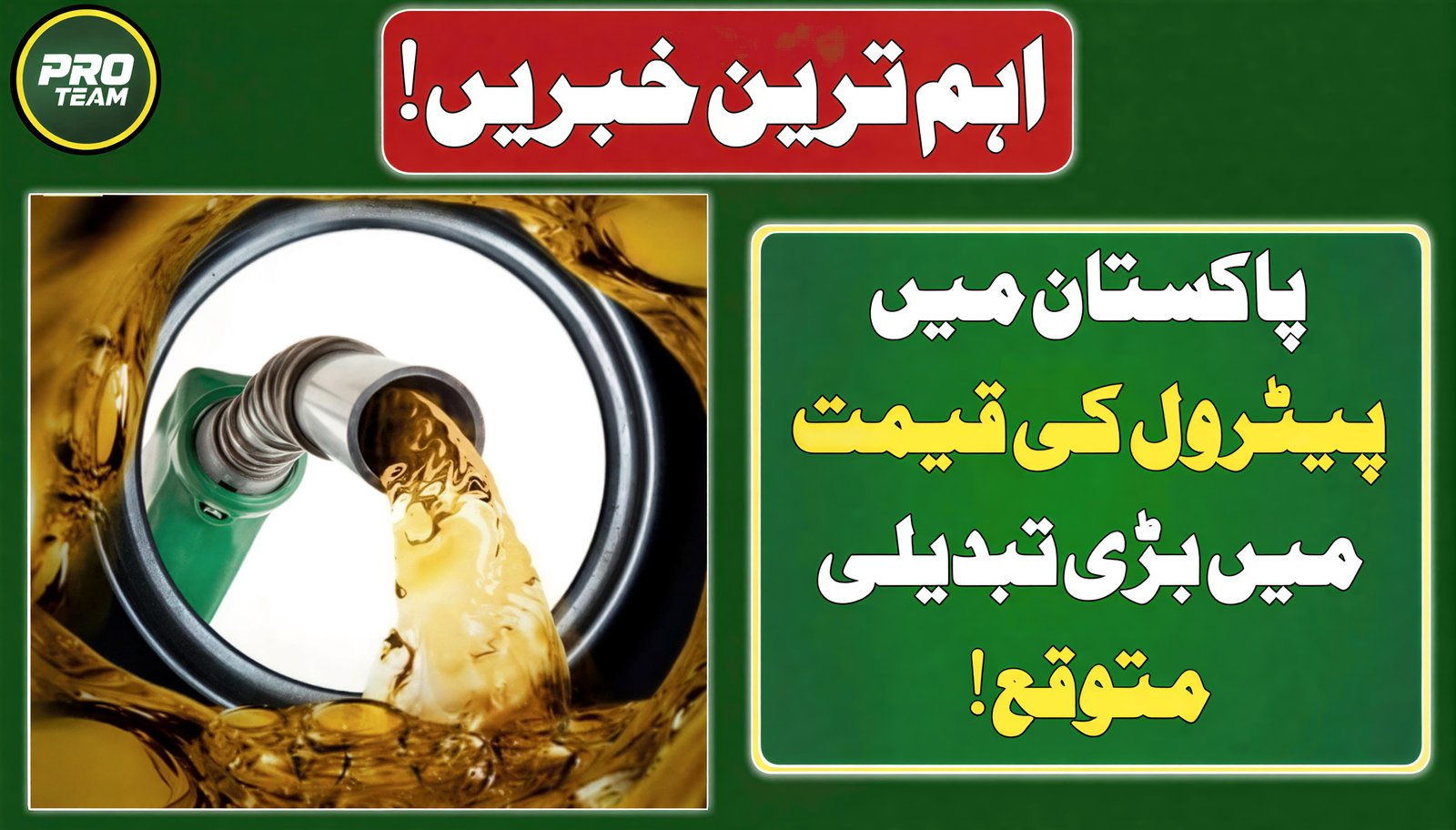
The petrol price in Pakistan expected from 16 February 2026 has become a hot topic across the country. From bike riders to car owners and transporters, everyone is waiting for the next fuel price update. According to early market signals and oil industry reports, petrol prices may slightly decrease, while diesel could remain stable. Although the final decision will come from the federal government, early estimates are giving some hope to the public during these tough economic times.
Read More: Punjab Bike Scheme Phase 2

Table of Contents

Expected Fuel Price Changes from 16 February 2026
| Fuel Type | Expected Change |
| Petrol (Motor Spirit) | Likely decrease of Rs. 2 to Rs. 4 per liter |
| High-Speed Diesel | Minor reduction or no change |
| Kerosene Oil | Prices likely unchanged |
| Light Diesel Oil | Expected to stay stable |
| Announcement Date | 16 February 2026 (Night) |
| New Rates Effective | 16 February 2026 |
These are expected figures, and final prices may slightly differ once officially announced.
Why Petrol Prices Are Reviewed Every 16 Days
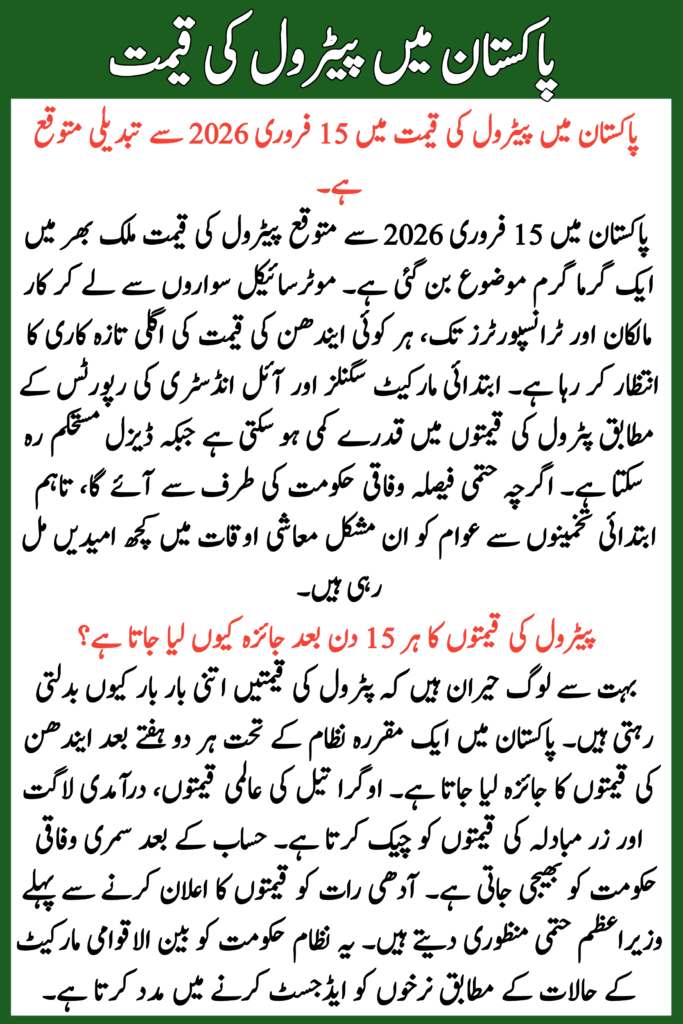
Many people wonder why petrol prices keep changing so often. In Pakistan, fuel prices are reviewed every two weeks under a fixed system.
OGRA checks global oil prices, import costs, and exchange rates. After calculations, a summary is sent to the federal government. The Prime Minister gives final approval before prices are announced at midnight. This system helps the government adjust rates according to international market conditions.
Read More: Nigehban Program Online Registration
How the Government Calculates Petrol Prices
Fuel pricing is not random. A proper formula is followed step by step:
- Average global crude oil prices of the last 15 days are calculated
- Import and freight charges are added
- Petroleum Development Levy (PDL) is included
- Oil company margins and dealer commission are added
- Final summary is approved and notified
This is why even small changes in the global oil market affect local petrol prices.
Impact of Petrol Price Change on Daily Life
Even a small cut in fuel prices makes a difference for ordinary Pakistanis.
- Bike & Car Users: Daily commuting costs reduce
- Public Transport: Bus and wagon fares may stay under control
- Food Prices: Transport costs affect vegetables and grocery rates
- Small Businesses: Delivery riders and ride-hailing drivers save fuel money
For middle-class families, every rupee saved matters.
Read More: Nigehban Ramzan Card
Current Petrol Price in Pakistan Before 16 February 2026
| Fuel Category | Current Price (Approx.) |
| Petrol | Rs. 253.17 per liter |
| High-Speed Diesel | Rs. 268.38 per liter |
| Kerosene Oil | Rs. 176.81 per liter |
| Light Diesel Oil | Rs. 154.41 per liter |
These rates were kept unchanged in the last review to maintain market stability.
Global Oil Market Influence on Pakistan
Pakistan imports most of its petroleum products. Currently, global crude oil prices are moving around $64–65 per barrel. Improved supply and reduced global demand have slightly lowered international prices. This trend is one major reason experts are expecting relief in the upcoming petrol price review.
Final Thoughts
The petrol price in Pakistan expected from 15 February 2026 may bring small but welcome relief for the public. While the decrease may not be huge, it can still help households manage expenses better. Citizens should wait for the official notification on 14 February night before planning fuel purchases.
Read More: Punjab Rashan Card Online Registration
FAQs
1. When will the new petrol price be announced?
The official announcement is usually made late at night on 14 February.
2. Will petrol prices definitely decrease?
No, these are predictions. Final prices depend on government approval.
3. Why is diesel usually more expensive than petrol?
Diesel is used in transport and agriculture and follows a different international pricing system.
4. Is GST applied on petrol in Pakistan?
GST is mostly zero, but the government collects revenue through the Petroleum Development Levy.
Latest Updates
 PSER Punjab Gov PK Registration 2026 – How to Apply Online or Offline (Complete Step-by-Step Guide)
 State Bank of Pakistan Ramadan Timing 2026 – Official Banking Hours Update
 Punjab Gas Supply Timings Announced for Ramadan 2026 – Complete Sehri & Iftar Schedule for All Cities
 How to Use the Kafalat Portal to Track Your Child’s BISP Payments 2026 – Complete Step-by-Step Guide
 BISP Installment Update 2026: Rs. 13,500 Payment Details and Complete Check Guide
 Live Update: 8070 Muft Atta Program 2026: Free Flour Registration in Pakistan